
Custom Management Panel vs. Ready Solutions: Tailoring Tech to Your Business
Choosing between a custom management panel and off-the-shelf software is crucial for business efficiency. This article explores why a tailor-made system, designed around your unique operational workflow, often outperform
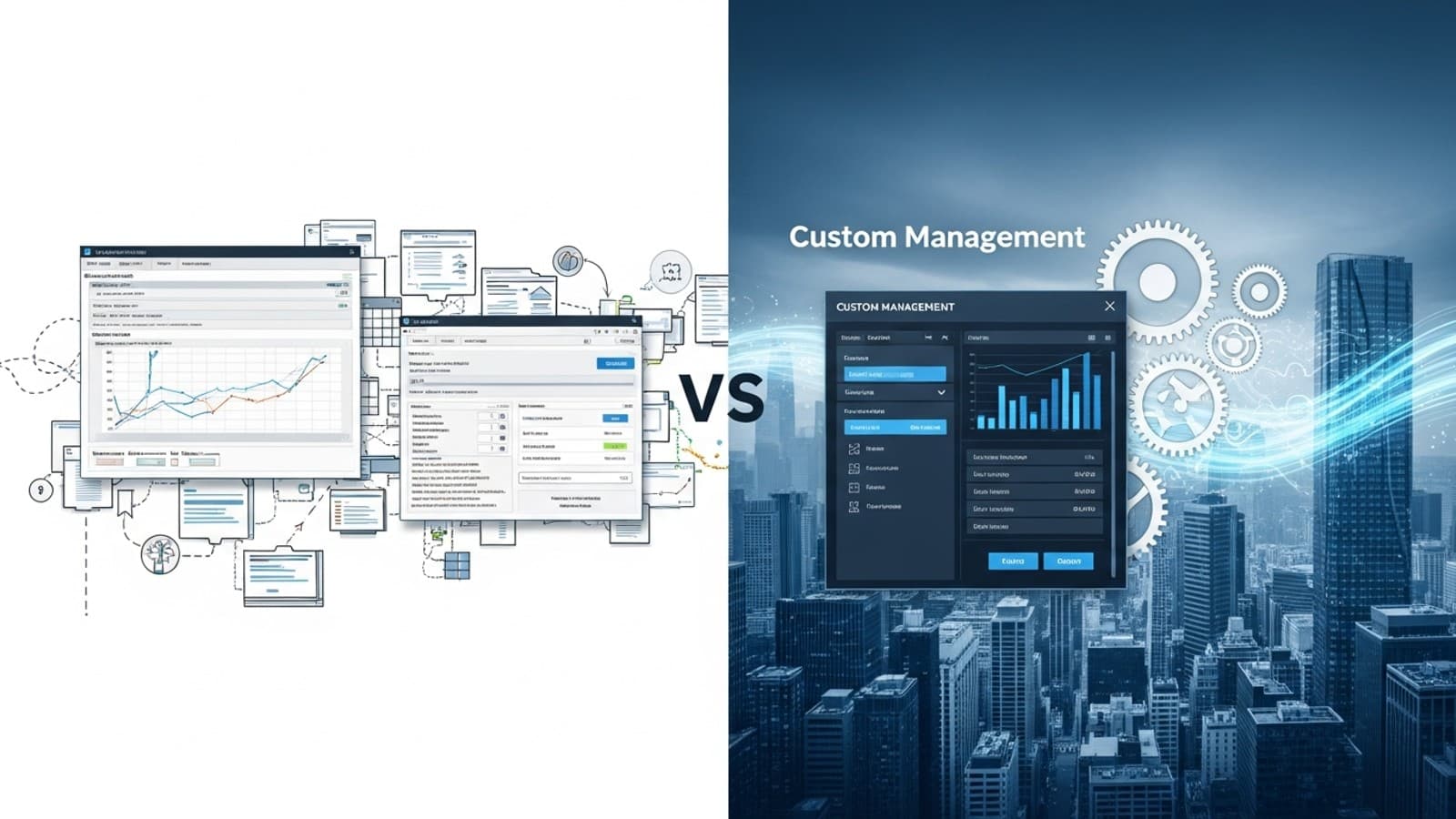
Many businesses reach a point where their digital tools no longer fully support their unique operational needs. The choice often comes down to adapting existing, ready-made software or investing in a custom management panel built specifically for their workflow. This article delves into why a bespoke system might be the ultimate solution for your business's efficiency and growth.
Why Does It Matter?
Off-the-shelf software, while often affordable and quick to implement, frequently forces businesses into uncomfortable compromises. You might find yourself adapting your established processes to fit the software's limitations, rather than the other way around. This can lead to:
- Inefficiency: Manual workarounds to bridge gaps between software functionalities.
- Fragmented Data: Information spread across multiple, unconnected systems (Excel, WhatsApp, email).
- Hidden Costs: Continuous licensing fees, unexpected customization costs, and lost productivity due to unsuitable features.
- Lack of Scalability: Inability to easily integrate new features or adapt to evolving business models.
- Compromised User Experience: Employees struggling with complex interfaces or unused features, leading to frustration.
Key Advantages of a Custom Management Panel
Investing in a custom management panel provides a powerful alternative, aligning technology perfectly with your business operations.
Perfect Workflow Alignment
Unlike generic software, a custom panel is designed from the ground up to mirror your specific operational flow. Every button, report, and automation is tailored to how your team actually works, eliminating unnecessary steps and improving accuracy. This ensures that the system truly serves your business, rather than the other way around.
Scalability and Flexibility
As your business grows and evolves, your custom panel can grow with it. New features, integrations, and reporting capabilities can be added seamlessly without having to switch platforms or overhaul your entire system. This future-proofs your digital infrastructure.
Enhanced Efficiency
By automating repetitive tasks and centralizing fragmented data, a custom panel significantly reduces manual workload. From customer tracking and order management to proposal generation and inventory control, processes become streamlined, allowing your team to focus on higher-value activities.
Cost-Effectiveness in the Long Run
While the initial investment might be higher, a custom solution often proves more cost-effective over time. You avoid recurring subscription fees for unused features and reduce the costs associated with inefficiencies and manual errors. The gains in productivity and streamlined operations quickly offset the initial outlay.
Data Visibility and Decision Support
A custom panel provides a centralized hub for all your business data, offering comprehensive reporting and analytics tailored to your KPIs. This enhanced visibility empowers your team to make faster, more informed decisions based on real-time, relevant insights.
Competitive Advantage
Having a system perfectly aligned with your unique business model can give you a significant edge. It allows for faster innovation, more responsive customer service, and more agile operations, setting you apart from competitors relying on generic solutions.
Implementation Recommendations for Businesses
Considering a custom management panel? Here are some steps to evaluate if it's the right choice for your business:
- Map Your Current Workflow: Document all your key operational processes, identifying pain points, manual tasks, and areas of fragmentation.
- Identify Bottlenecks: Pinpoint where off-the-shelf solutions fail to meet your needs or create inefficiencies.
- Define Future Needs: Consider your growth plans and how your digital infrastructure needs to adapt in the next 3-5 years.
- Prioritize Features: Distinguish between